By Victoria Qiu · · 6 min read
The price of custom box packaging depends on more than the box itself. Size, board construction, printing, finishes, order quantity and delivery all affect the final budget. A lower unit price can also come with higher freight, assembly or storage costs.
For brands planning cardboard box packaging, the useful question is: which specifications protect the product, support the brand and keep the complete order practical? This guide explains the main cost drivers and how to prepare a clearer brief for XINXIN Printing & Packaging.
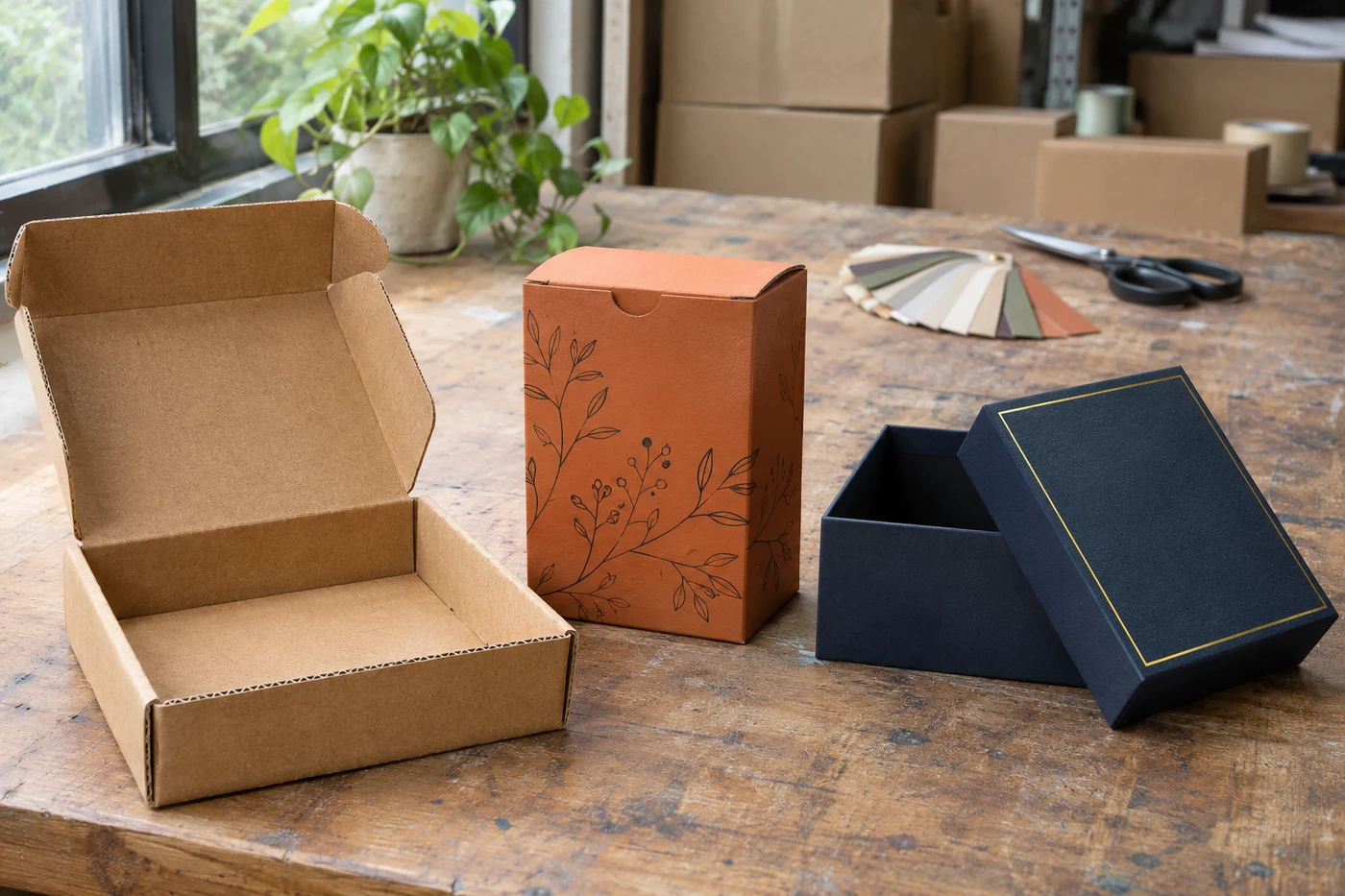
Start With the Right Box Structure
“Cardboard box” is a broad term. A single-layer paperboard retail carton and a fluted corrugated shipping box have different constructions and functions. A wrapped rigid gift box adds another set of material and assembly requirements.
| Box type | Typical role | What to review for the quote |
|---|---|---|
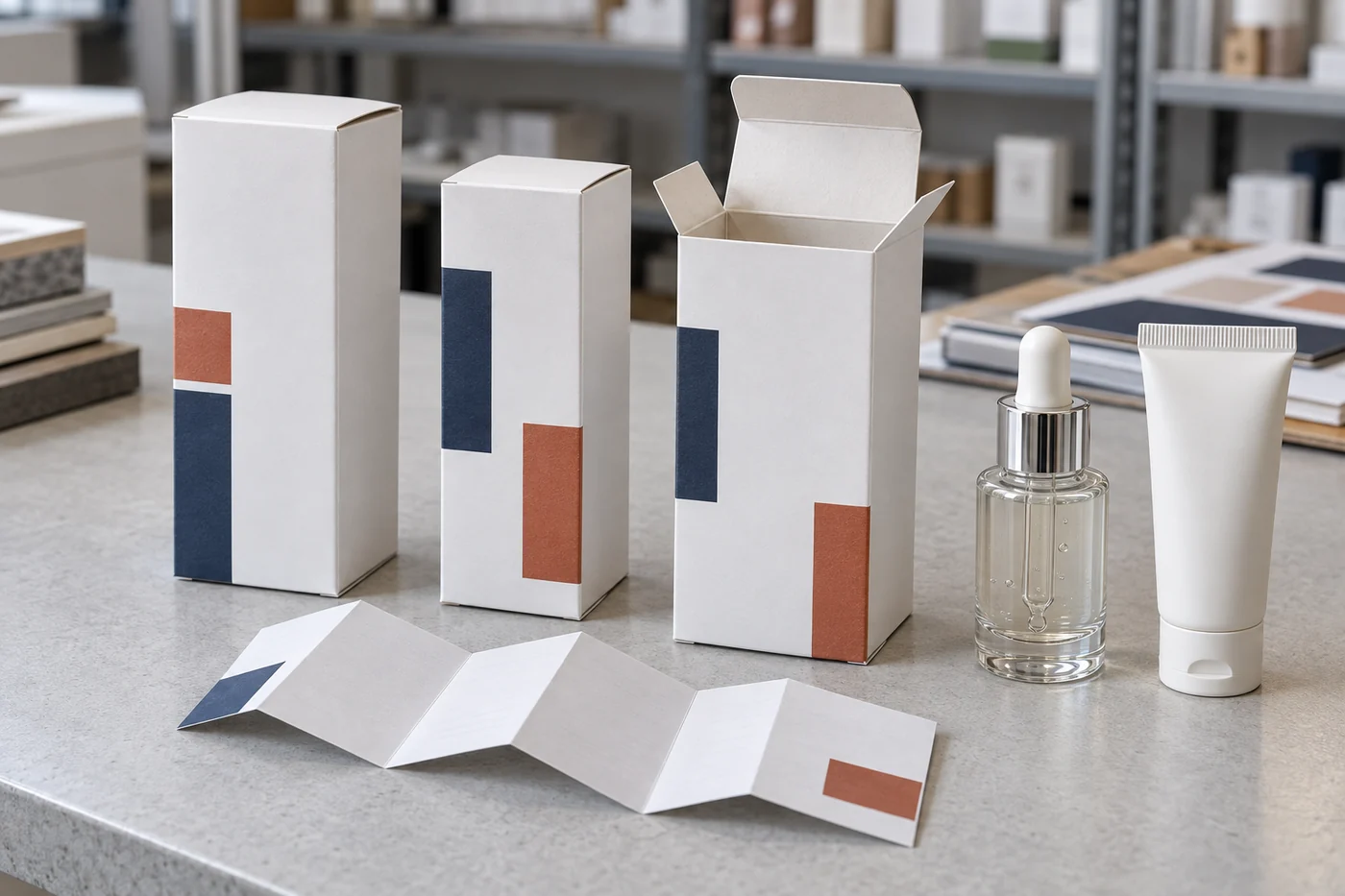
| Folding carton | Lightweight retail products, cosmetics and small accessories | Paperboard grade, dimensions, print and folding details |
| Corrugated mailer or shipping box | E-commerce orders and distribution | Board grade, flute, closure, packed weight and transport conditions |
| Rigid gift box | Gift sets and premium presentation | Board core, wrapping paper, lid or closure, inserts and assembly |
Choose the structure around the sales channel and product needs. A retail carton may still need an outer shipping box; a rigid presentation box should not automatically be treated as a parcel shipper.
Explore XINXIN’s folding cartons and gift boxes or printed corrugated boxes to define a suitable starting point.
Six Factors That Shape Your Packaging Quote
1. Dimensions and material
An oversized box uses extra board and leaves more space to fill. Start with the product dimensions, weight and any accessories, then allow room for the insert and protection actually needed. Specify whether proposed box measurements are internal or external.
Board grade matters as well as thickness. Ask for a construction suited to the packed product and handling conditions, then assess a sample. Choosing a thicker board without checking its performance can add cost without solving the real problem.
2. Printing and artwork
Print method, coverage, inside printing and the number of artwork versions can affect the quote. Ask which process fits the selected board, artwork and quantity rather than assuming one printing method is always cheaper.
Good packaging box design also means a production-ready file: use the approved dieline, confirm bleed and color requirements, and check text and barcodes before sign-off. Late artwork changes can mean new proofs or additional setup.
3. Finishes and inserts
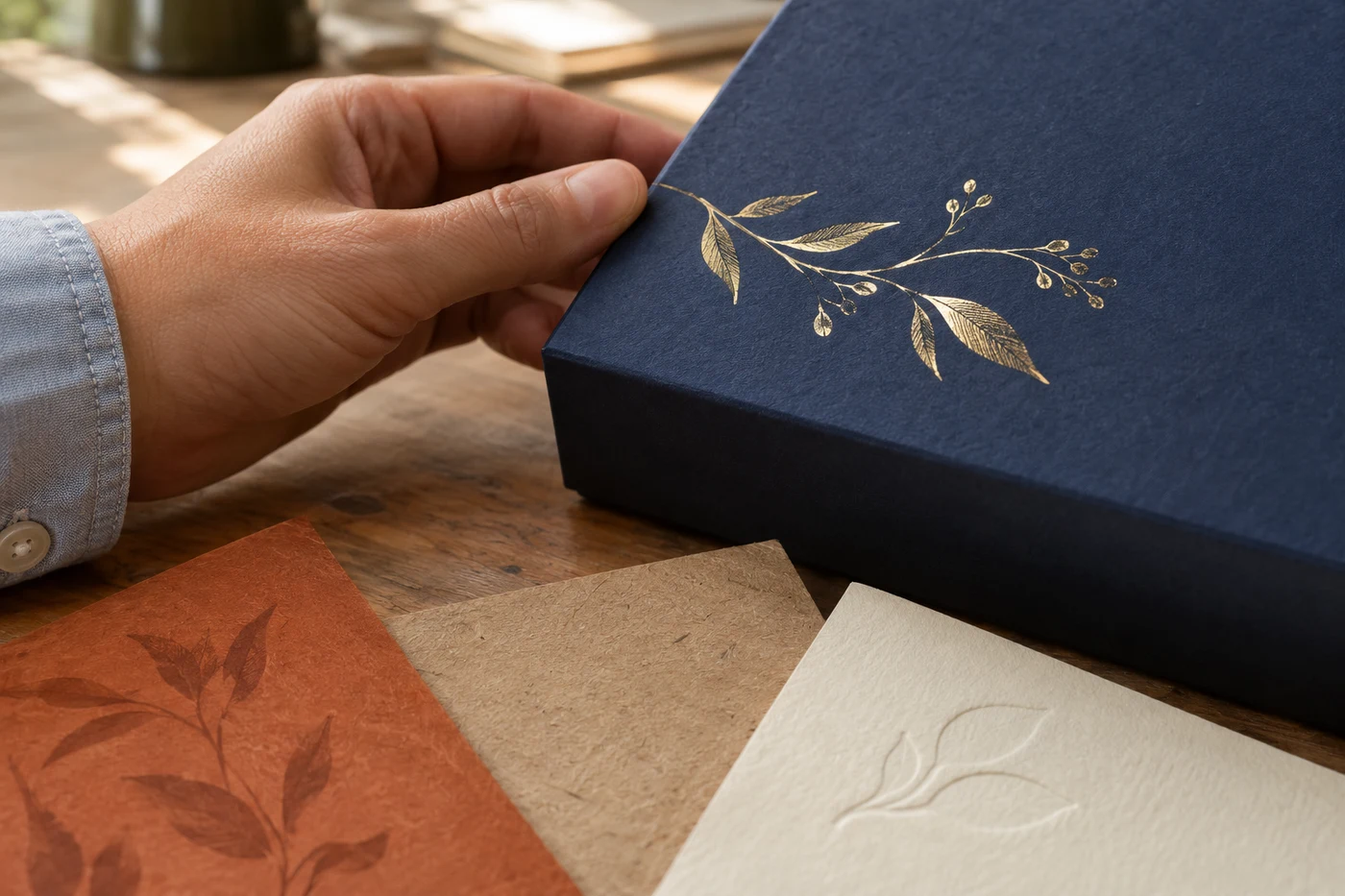
Foil, embossing, spot coatings and laminations add different materials or production steps. Use them where they contribute most to the design, such as a logo or focal detail, and compare the proposed specification with a simpler version.
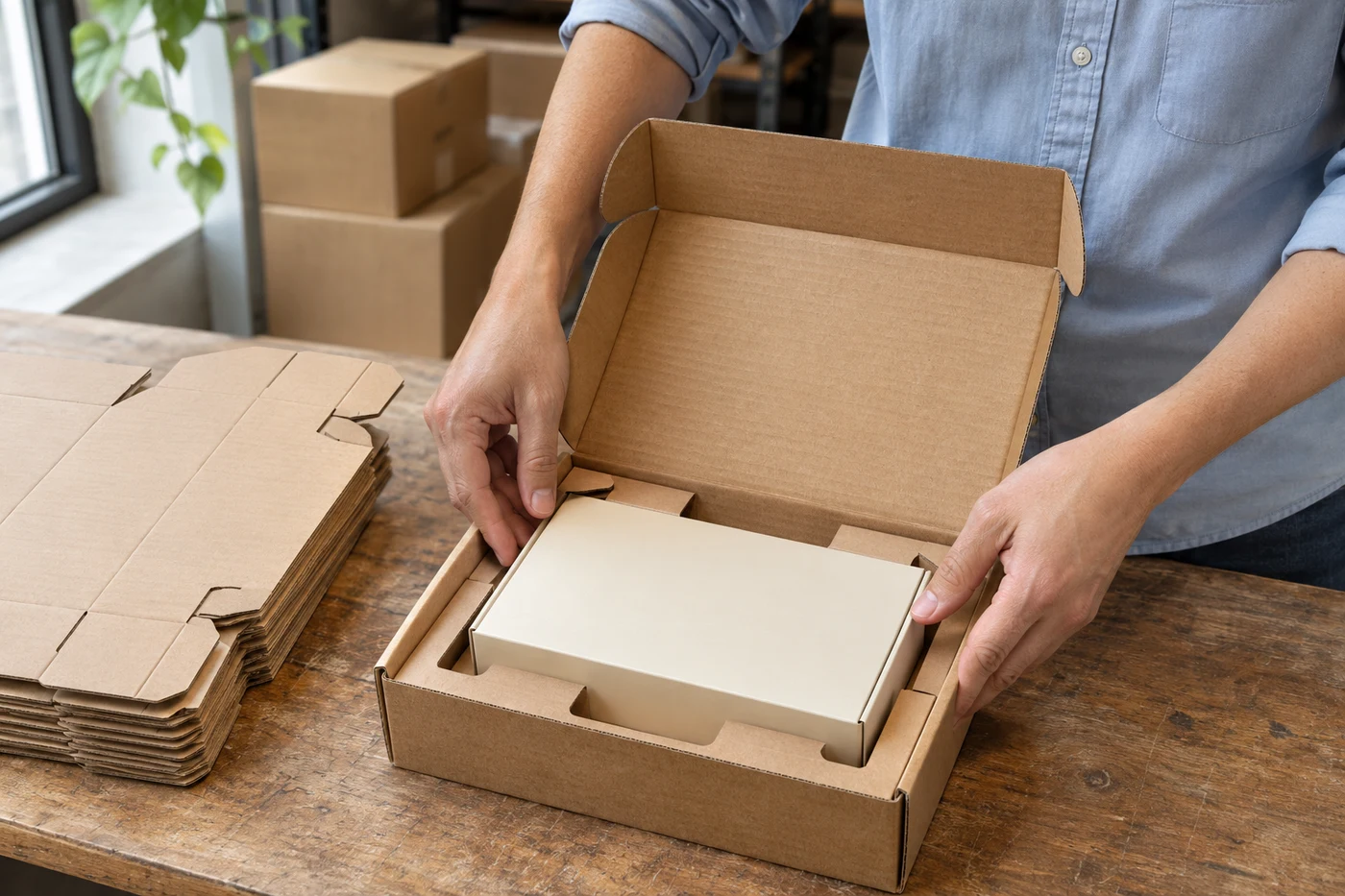
An insert should hold the actual product securely and allow easy removal. Review its material, number of parts and assembly time. Removing necessary protection to reach a lower price can create a more expensive damage problem later.
4. Quantity and repeat orders
Larger orders can spread tooling and setup costs across more boxes, but a lower unit price is only useful if the stock will be used. Request quotes for two or three quantities that match realistic demand.
Compare the total purchase amount, storage needs and the risk of future artwork changes. For repeat orders, ask whether existing tooling can be reused and which charges still apply. Minimum order quantities depend on the project; confirm them for the chosen structure and process.
5. Assembly and packing format
Flat-packed cartons and mailers can take less storage space than assembled boxes, while adding folding work at your packing station. Ask how the packaging will arrive, how it is assembled and how many units fit in each outer carton.
For custom packaging, both supplier assembly and your own packing labor belong in the budget. Check a sample with the team that will pack the product before finalizing the format.
6. Freight and delivery scope
Request packed carton dimensions, shipment weight, delivery destination and a clearly stated delivery scope. Check which transport charges and import-related costs are included or excluded. Compare quotes on the same basis.
For cardboard box packaging, the purchase price is only part of the decision. Include shipping, applicable import costs, storage and packing labor when reviewing the full order budget.
How to Save Without Weakening the Package
The most useful savings often come from better planning:
- Right-size the box: remove unnecessary empty space while retaining the required protection.
- Simplify selectively: compare a simpler closure, fewer insert parts or a focused finish.
- Share a structure across products: where fit allows, use one box format with different artwork or labels.
- Approve before production: confirm the structure, print proof and packing method to limit rework.
Compare every quotation against the same dimensions, board, print coverage, finishes, insert, quantity and delivery scope. Otherwise, the lowest price may describe a different package.
Request a Custom Box Packaging Quote From XINXIN
Send your product dimensions and weight, preferred box style, expected quantity, artwork or reference images, delivery destination and target date. Mention any insert or protection requirements.
XINXIN Printing & Packaging offers folding cartons, gift boxes and printed corrugated boxes. Contact our team or email info@xinxinprint.com to discuss your packaging box design and quotation requirements. Materials, samples, minimum order quantity, pricing and timing should be confirmed for your project.
Frequently Asked Questions
How much does custom packaging cost?
There is no universal price. The quote depends on dimensions, materials, construction, printing, finishes, quantity and delivery scope. Share a defined specification for a meaningful estimate.
Is a larger order always the better choice?
No. It may lower the unit cost, but excess inventory ties up cash and storage space. Choose a quantity you can use before the product or artwork changes.
Can a simpler cardboard box still look premium?
Yes. A well-proportioned structure, suitable paper, precise printing and a restrained finish can create a polished presentation. Check the proposed result on a sample.
General guidance only. Discuss the product-specific materials, process, market requirements and testing before approving production.