By Victoria Qiu · · 8 min read
To buy custom printed shipping boxes that perform, specify five things before you request pricing: inside dimensions, packed weight and load path, corrugated grade and flute direction, print area and artwork placement, and the logistics conditions the box must survive. Agree on acceptance criteria before production starts. Everything else — board grade, closure style, pallet pattern — follows from those decisions.
Start With the Box’s Job, Not the Artwork
A brief that describes artwork without explaining the shipping conditions can leave structural questions unresolved. A box that ships a single 2 lb item to a residential address is a different problem from a box that palletizes 24 units and travels through a regional distribution center.
Before artwork enters the conversation, write one sentence describing what the box must do. For example: “Ship one ceramic mug, 3 lb packed, individual parcel delivery, customer opens it on camera.” That sentence drives structure, board grade, and print area all at once.
The Specification Checklist
1. Inside dimensions — measured, not estimated
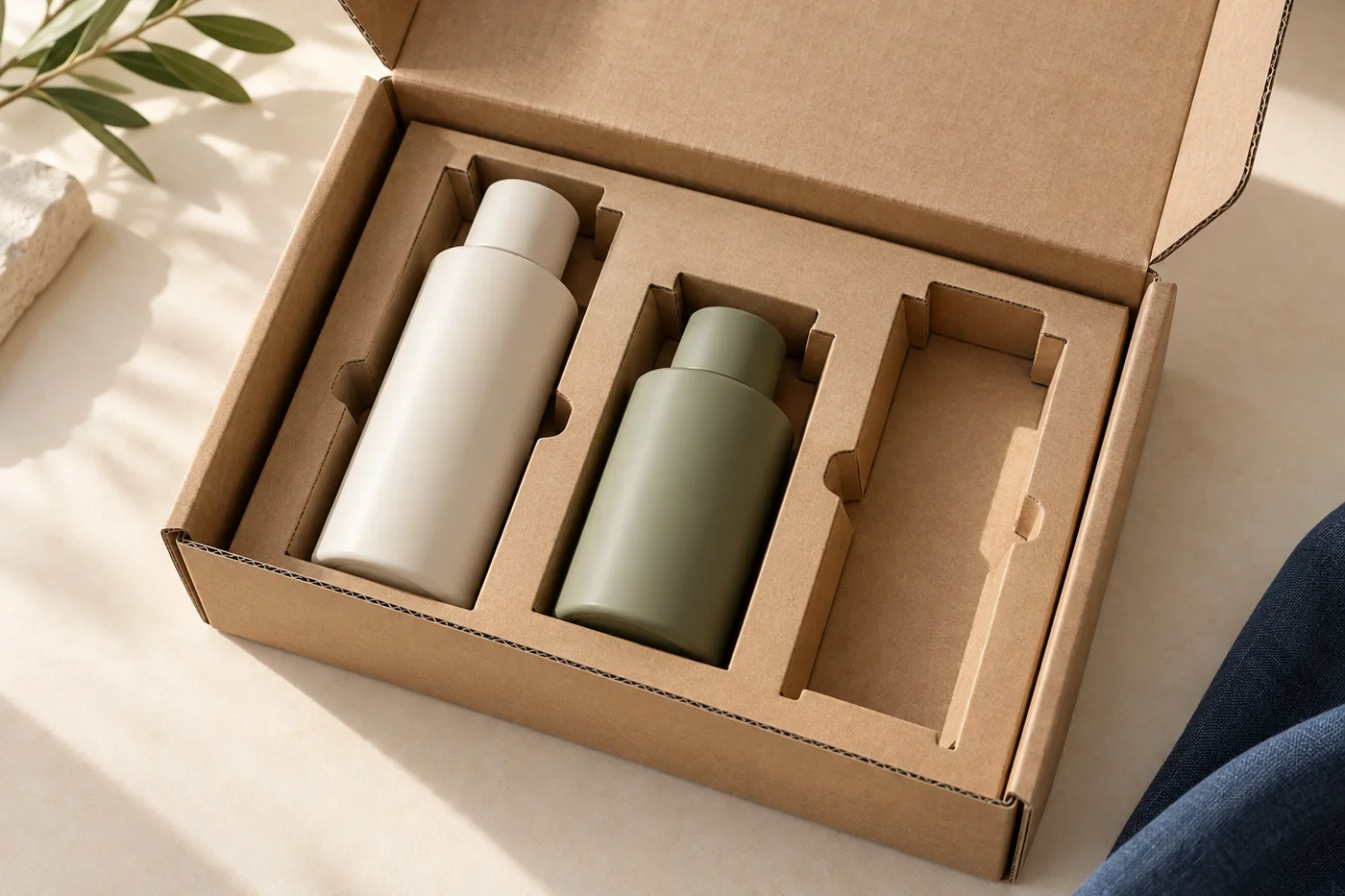
Give inside dimensions, not outside. Outside dimensions change with board thickness, and flute height varies by grade, so a box quoted from outside measurements can arrive too small for the product plus dunnage.
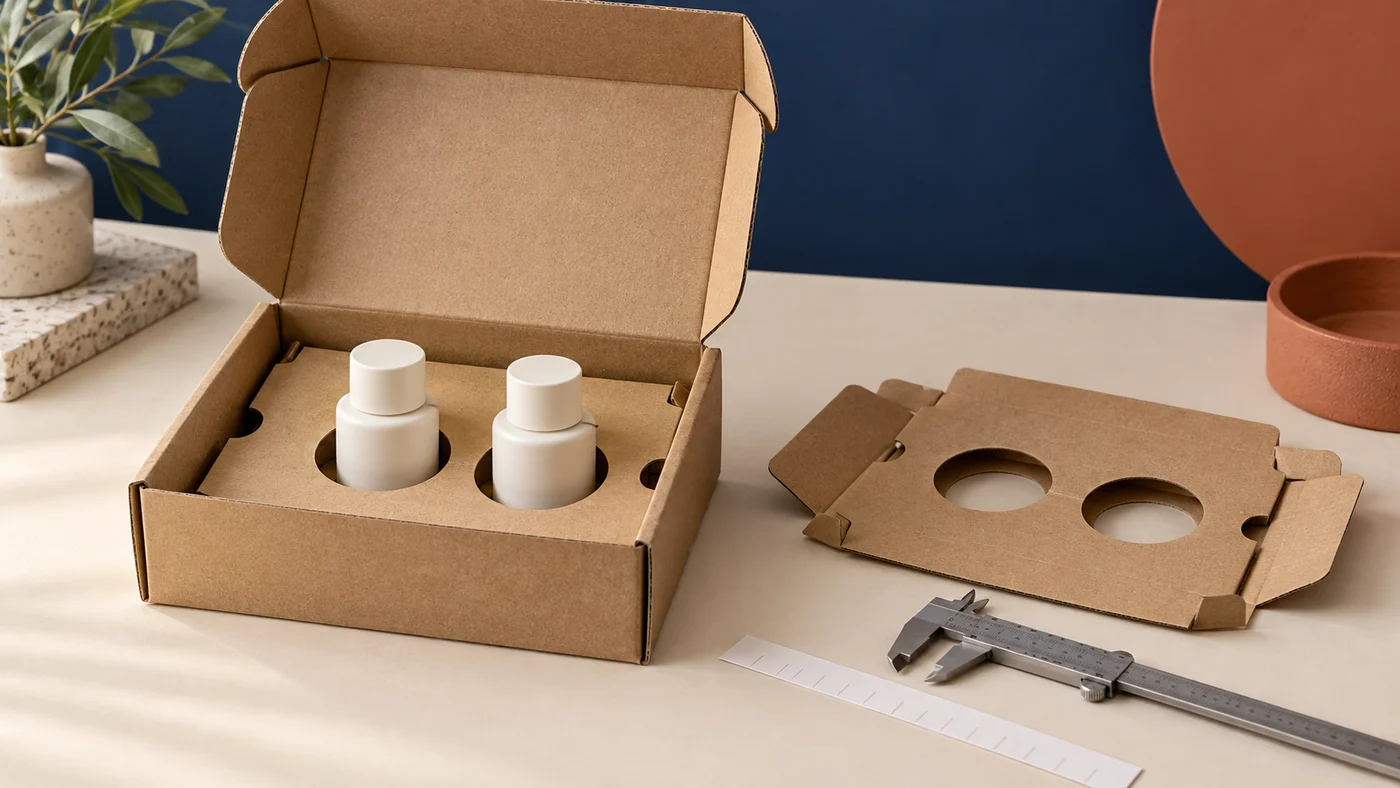
Measure the packed product, including any inner packaging, cushioning, or insert. Then state clearly whether the dimensions you are quoting are the minimum acceptable inside space or the finished inside space. If the product can shift, state the tolerances that matter.
2. Packed weight and how the load is carried
Packed weight per box is the number that drives corrugated grade and flute selection. Also describe the load path:
- Single parcel shipment or palletized freight
- Stacked in a warehouse, or top-loaded only
- Hand-carried by the end customer, or moved by conveyor and forklift
- Any point where the box is compressed, dropped, or crushed
The right board grade and flute are selected after reviewing load and packing requirements. If a supplier proposes a grade without asking about weight and stacking, that is a signal to ask more questions.
3. Print area, artwork, and shipping information
Corrugated packaging carries two kinds of print: brand graphics and operational information. Both belong in the specification.
Cover these items:
- Brand graphics: logo placement, color build, minimum text size, and any required clear space
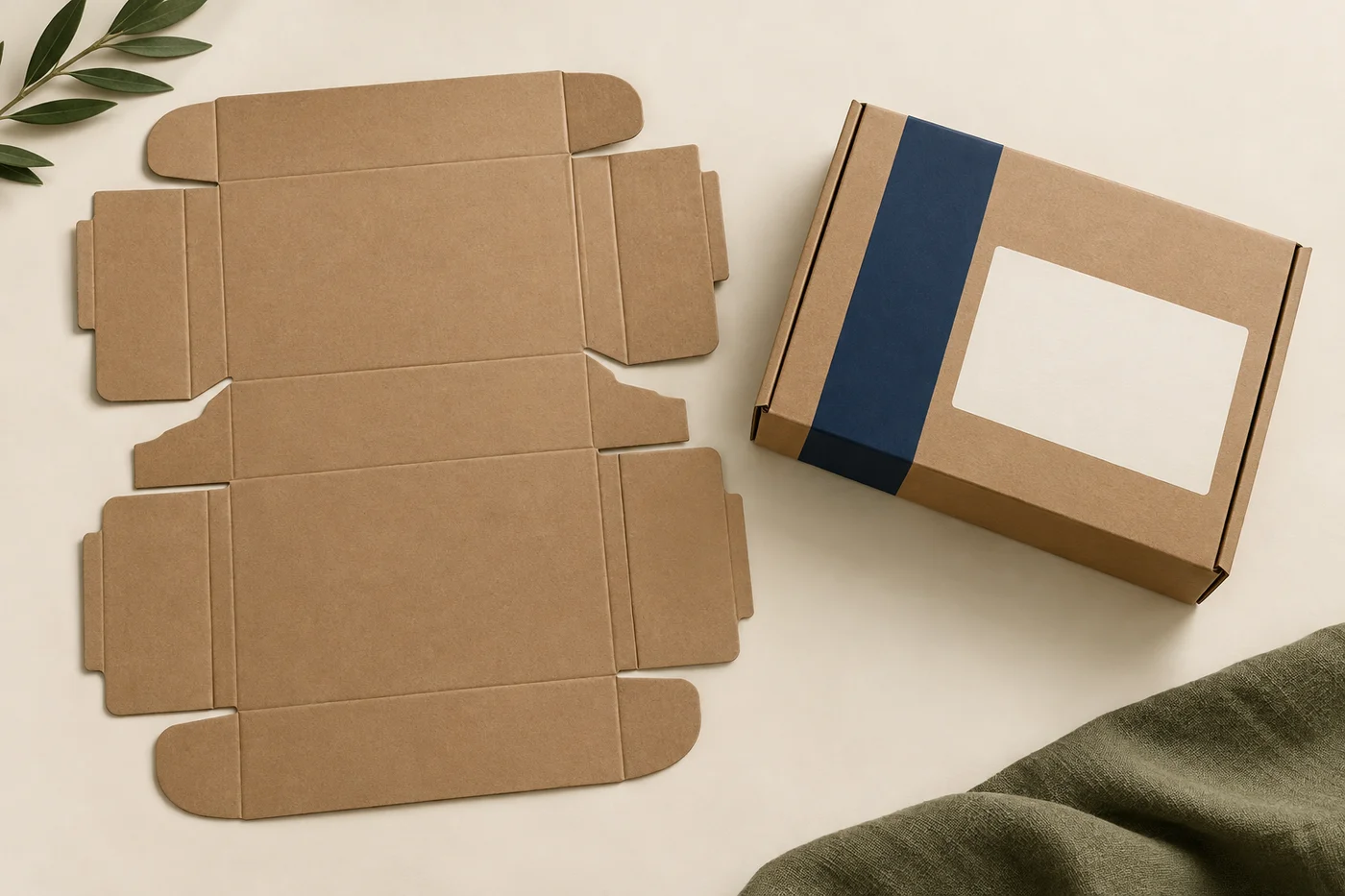
- Shipping information: carrier labels, barcodes, and where they will be applied — printed panel or applied label
- Product identification: SKU, size, or variant callouts
- Handling marks: this-side-up arrows, fragile marks, and any handling symbols your customers require
State the available print area in inches for each panel you want printed, and confirm whether the print is applied directly to the corrugated board or on a laminated sheet. These routes have different artwork requirements and different visual results on textured kraft surfaces. Ask to review print contrast and any coating on the actual paper stock, not on a screen proof.
4. Order quantity and logistics conditions
Order quantity belongs in the first quote request, along with how the boxes will be delivered and stored. Corrugated is bulky; a quantity that fits a truck is different from a quantity that fits a shelf. Mention:
- Quantity for the first order and expected annual volume
- Ship-to destination and whether the boxes ship flat or assembled
- Storage conditions — humidity and stacking are the usual culprits in box failure
- Any consolidation or distribution-center routing requirements
5. Performance requirements and acceptance criteria
Include performance requirements in the first brief. If the box must meet a customer’s packaging specification, a retailer’s requirement, or an internal quality standard, name the required test methods and the acceptance criteria in the brief — before production.
Required test methods and acceptance criteria should be agreed with the buyer in writing. A document listed in a checklist is not proof that a test has been performed; request actual reports when you need them.
Mailer Box or Regular Shipping Carton?
Both structures are available in the corrugated and mailer box range, along with printed retail cartons and produce-style boxes. The choice is usually driven by the unboxing experience versus handling efficiency.
| Decision point | Mailer box | Regular shipping carton |
|---|---|---|
| Best fit | Direct-to-consumer orders where the box is part of the brand experience | Parcel, bulk, and distribution shipments where protection and cost efficiency dominate |
| Opening experience | Designed front-opening or tuck-front presentation | Utility opening; presentation comes from inner packaging |
| Print surface | Multiple visible panels, strong brand real estate | Usually top and side panels; often barcode and label zones |
| Structure considerations | Assembly time, insert fit, and stacking strength | Compression strength, pallet pattern, and closure method |
| Ask for samples when | Artwork wraps corners, or inserts must fit precisely | Weight or stacking is near the limit for the proposed grade |
A common and practical approach is a printed mailer box for the customer-facing order and a plain or lightly printed shipping carton for bulk and retail replenishment. If both are in scope, quote them together so artwork and board decisions stay consistent.
Samples and Approval Documents
Ask for a physical sample before production, and approve it against the specification rather than against how it looks on a desk. A pre-production sample review should confirm:
- Inside dimensions with the actual product packed
- Board grade and flute, stated on the sample or documentation
- Artwork position, color, and legibility of small text
- Closure and assembly — does it fold and stay closed as intended
- Print contrast and finish on the actual paper stock
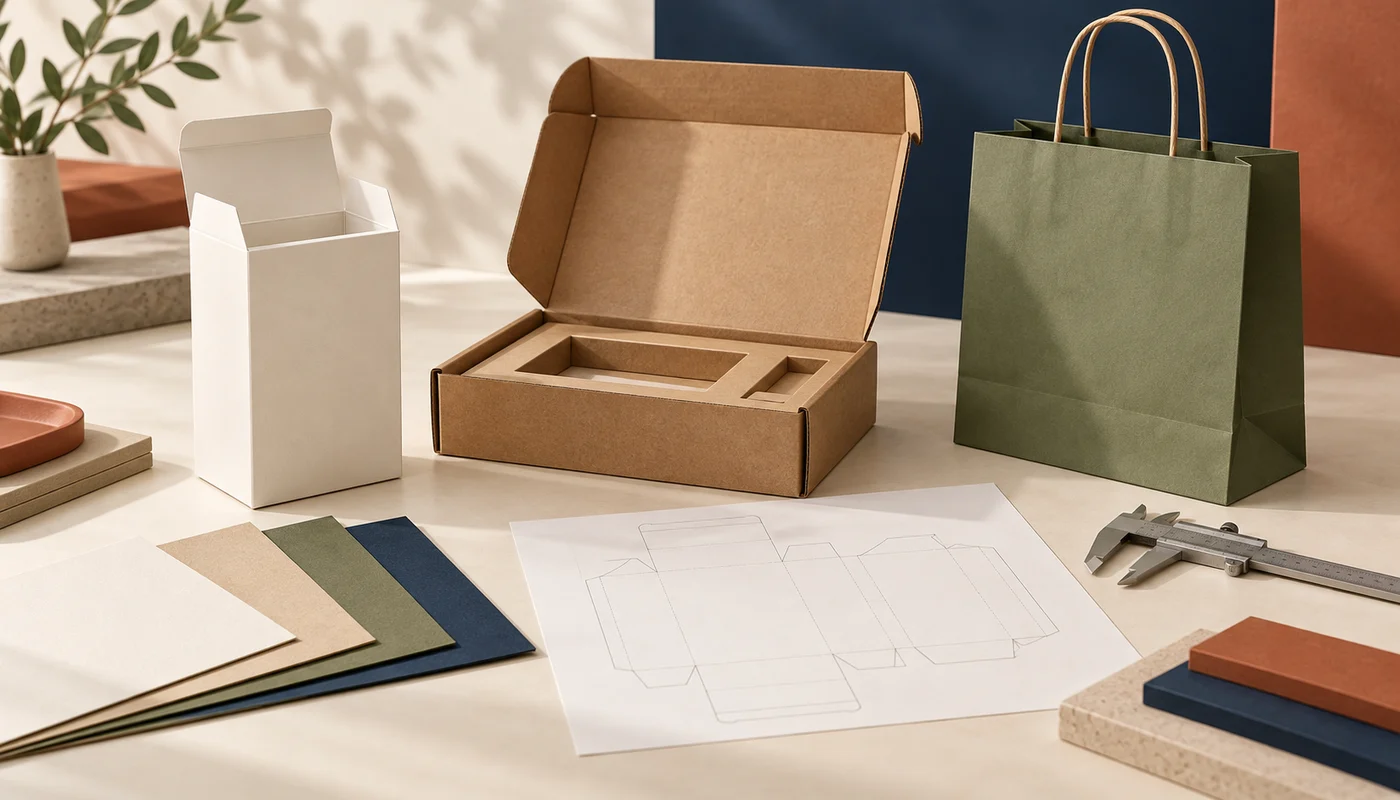
Alongside the sample, request the artwork approval document set: dieline, print-ready source files, and a signed proof. If your team supplies files rather than the supplier, confirm file format, color mode, and bleed expectations early. Use an artwork handoff checklist to record the agreed file requirements.
For the full structural range, see printed corrugated boxes. For material and finish comparisons across folding paperboard, rigid board, corrugated, kraft and specialty papers, see our capabilities.
A Quote Request Template
Include these details to reduce avoidable follow-up questions:
- Product description and packed weight per box
- Required inside dimensions, with tolerances
- Structure preference (mailer box, shipping carton, retail carton, or open to recommendation)
- Print area per panel and whether shipping labels are printed or applied
- Artwork status — existing dieline, print-ready files, or design still in progress
- Order quantity and expected annual volume
- Ship-to destination and logistics conditions
- Any required test methods and acceptance criteria
Buyer FAQs
What inside dimensions should I provide? Measure the packed product including cushioning or inserts, and send inside dimensions with a stated tolerance. If you are unsure about dunnage, send the product dimensions and describe how it will be protected — the supplier can recommend a fit.
Can I print full-color brand artwork on corrugated? Yes, but the print route matters. Direct printing on corrugated and printing on a laminated sheet produce different results, particularly on textured kraft surfaces. Ask which route is proposed and review a physical sample on the actual stock before approving.
Do I need a production sample, or is a digital proof enough? A digital proof confirms artwork content. It does not confirm fit, board grade, or how the print reads on the board. For a new structure, a new board grade, or artwork that wraps corners, request a physical pre-production sample.
Should I specify a compression or drop test? Specify a test only if you have a requirement behind it — a customer specification, a retailer program, or a history of damage. Name the method and the acceptance criteria, and confirm with the supplier before production that the requirement is understood and how it will be verified.
How do I keep the printed box and the shipping label from fighting each other? Plan the label zone as part of the artwork. Reserve a clear, light-colored panel for barcodes and carrier labels, and keep brand graphics out of it. A barcode that lands on a dark printed area is a scanning problem, not a design problem.
Next Step
Send your specification for review. Include product dimensions, packed weight, order quantity, artwork status, destination, and any application requirements such as stacking, labeling, or customer handling. If you need samples, artwork approval documents, or test documentation, say so in the same message so they can be included in the response.
Request a quote or email info@xinxinprint.com.
General guidance only. Discuss the product-specific materials, process, market requirements and testing before approving production.