By Victoria Qiu · · 8 min read
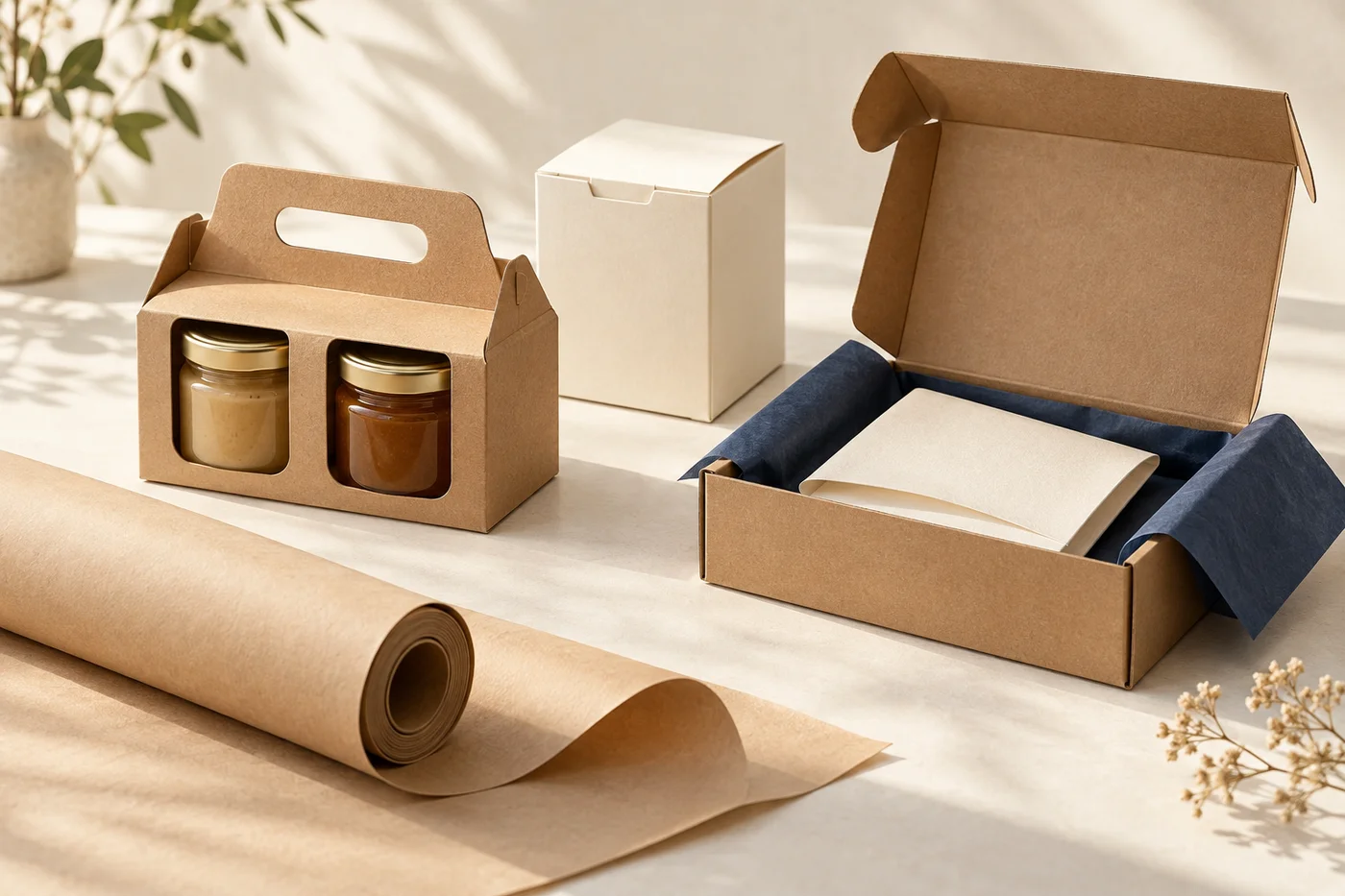
Paper-based packaging is moving into more applications because suppliers are developing material and converting systems together — not because paper has become a drop-in replacement for plastic everywhere. For US buyers, the practical task in 2026 is verification: identify which packaging layer is actually changing, get the exact substrate, coating, adhesive and closure in writing, and approve the construction on a packed sample tested against your own distribution, retail and e-commerce requirements.
What Changed in Paper Packaging in 2026?
Three primary sources frame the current discussion, and each is a named company’s account of its own work rather than an independent test result.
On 20 October 2026, UPM announced a paper-based secondary packaging development with Siegwerk and Uteco, combining base paper, coating and converting technology for that specific system, while noting that the primary package still protects product integrity. On 9 September 2026, Amazon described adapting extensible paper and packing machinery across its North American e-commerce network, with material and shipment evaluation. On 24 September 2026, Billerud published a trend report pointing to increased interest in fiber-based alternatives while emphasizing the balance between reduced material use and product protection.
Taken together, these announcements support a current interest in material-plus-process development. That is our editorial inference, not a quantitative market-share statement or a validated US forecast. The useful takeaway for buyers is not a headline percentage — it is that the examples connect the material with construction, converting and fulfilment fit. Those are practical subjects for a purchasing review.
Start With the Packaging Layer
Before comparing suppliers, separate the job the packaging does into three functions:
- Primary containment — the surface that holds the product, protects it from moisture, grease, oxygen or contamination, and may carry food-contact obligations.
- Secondary grouping and presentation — sleeves, wraps, trays, cartons and shelf-ready formats that bundle, brand or display.
- Transport protection — corrugated shippers, inserts and void fill that absorb the distribution environment.
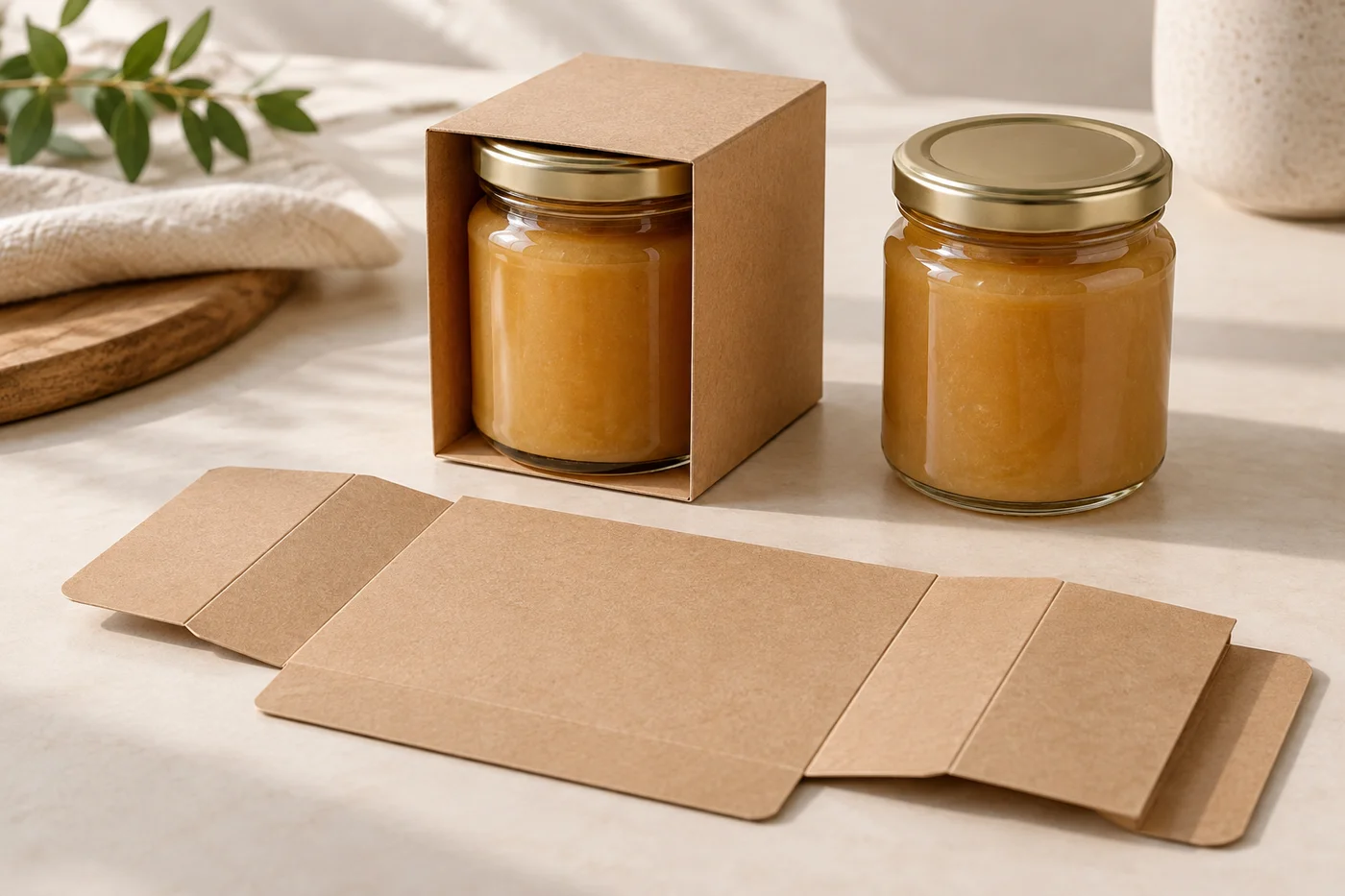
A paper sleeve around a sealed jar does not replace the jar. A brown sheet alone does not establish the absence of plastic, nor does it prove a barrier property. Whether a paper-based change is realistic depends entirely on which of the three functions is being re-engineered, and whether the remaining functions are already solved elsewhere in the pack.
Ask your supplier to state which layer their proposal changes and which layers it leaves untouched. Use that answer to define the scope of the quote and sample review.
Five Questions to Ask Before Switching Materials
1. Which packaging layer is actually changing?
Confirm whether the proposal covers primary containment, secondary presentation, transport protection, or a combination. If a plastic element is being removed, ask what now performs that function and where in the pack it sits.
2. What exactly is the proposed construction?
Request the specific board or paper grade, basis weight, coating, adhesive, closure method and any window or liner. “Paper-based” is a category, not a specification. Vague descriptions make samples impossible to replicate and quotes impossible to compare.
3. Will converting and fulfilment still work?
Ask how the construction runs on your existing case packers, label applicators, printers and sealing equipment, and whether it changes pallet patterns, cube or line speed. A material that performs in a lab but jams a packing line is not a saving.
4. What sample and acceptance criteria will you sign off on?
Ask for a packed sample using the real product and representative distribution conditions. Agree on the acceptance criteria relevant to that pack, such as compression, drop, abrasion, print registration and closure integrity. Agree in advance who tests what and how a failure is resolved.
5. What supports the recycling or disposal instruction?
Recycling guidance depends on the finished package, its components and the intended US sales location — and local programs vary. Ask for the documentation behind any on-pack instruction rather than accepting a general claim, and treat recyclability, compostability, plastic-free status and carbon comparisons as items to verify, not assumptions to publish.
A Practical Comparison for US Buyers
Use this as a discussion framework with any supplier, including XINXIN. It is not a specification and does not replace your own qualification process.
| Decision area | What to request in writing | What a complete answer looks like | Risk if skipped |
|---|---|---|---|
| Layer and scope | Which pack functions change | Named layers, with untouched functions listed | Paper credited with protection it does not provide |
| Substrate and coating | Grade, weight, coating, liner | Specific materials, not category terms | Samples that cannot be reproduced at scale |
| Adhesive and closure | Adhesive type, closure method | Stated compatibility with the substrate | Field failures, open packs, returns |
| Converting and fulfilment | Line trial plan, equipment assumptions | Trial on your packing setup, not only the supplier’s | Downtime and rework after launch |
| Disposal wording | Basis for any on-pack instruction | Documentation tied to the finished pack and market | Unsupported environmental messaging |
| Sample approval | Packed sample and acceptance criteria | Signed criteria before mass production | Disputes over what “acceptable” means |
Build a Pilot Around the Real Product
Use the actual product in the pilot where feasible, and document any substitute used. A suggested sequence to adapt to the project:
- Send the supplier your product dimensions, packed weight, order quantity and destination.
- Share artwork files and dieline requirements, including print process and color targets.
- Define the distribution path: retail floor, parcel network, palletized freight, or mixed.
- State the relevant performance requirements in writing, such as handling, moisture exposure or shelf life.
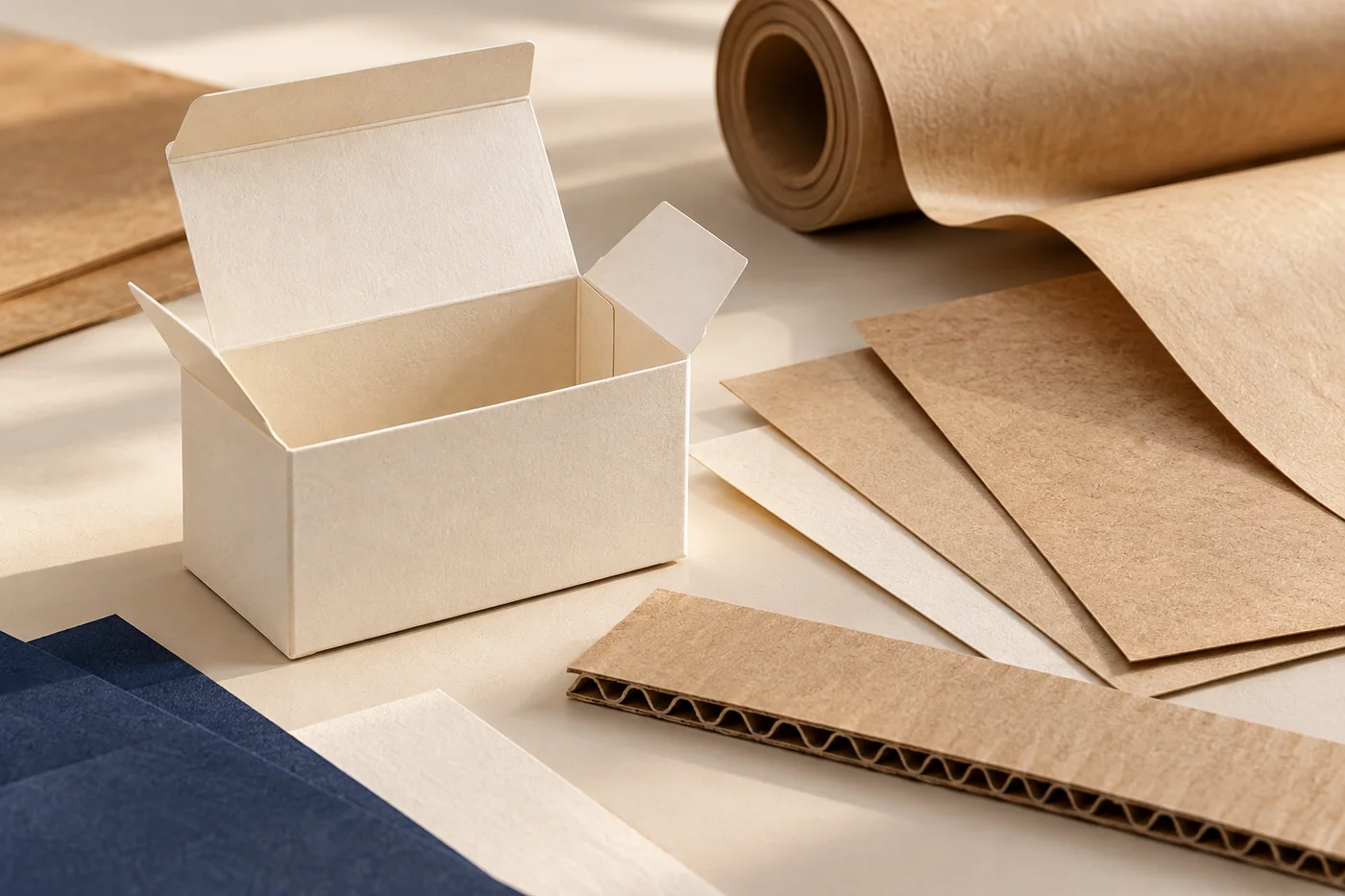
- Request material samples and a plain (unprinted) structural sample first.
- Approve structure, then move to a printed sample.
- Test the packed sample with your own product, at your own facility or lab.
- Record results against the written acceptance criteria.
- Confirm the disposal or recycling wording you intend to print, and the evidence behind it.
- Review cube, pallet count, line speed and labor before scaling.
Document each step. Keep the results with the agreed specification so the approval records cover performance as well as appearance.
Buyer FAQs
Does a paper-based pack mean the product is unprotected? No. It means the protection has to be specified — often by coating, liners or an unchanged primary pack — and then verified on a packed sample.
Can we reuse our current dielines? Sometimes. Review fold behavior, thickness and the proposed construction before deciding whether an existing dieline can be retained or needs revision.
Is it enough to say “recyclable” on pack? Only if you can support that wording for the finished package and the specific US market where it sells. Ask what documentation exists.
How long should a pilot take? It depends on your test requirements and review cycles. Agree milestones rather than dates at the outset.
Discuss Your Paper Packaging Brief
Commercial information from XINXIN
XINXIN Printing & Packaging works with US brand owners, importers and sourcing teams on custom paper packaging and printed materials. To get a useful response rather than a generic quote, send:
- Product dimensions and packed weight
- Order quantity and expected reorder pattern
- Artwork files and any existing dieline
- Destination market and distribution channel
- Performance requirements: compression, drop, moisture or grease exposure, print and finish expectations
Start with our gift box and corrugated box ranges, review the custom printed shipping box specification checklist, or look through our capabilities. Then send your brief through the contact page or by email to info@xinxinprint.com, and we will confirm what we can quote against your requirements.
Sources and Scope
The following primary sources were reviewed for this article on 27 October 2026.
- UPM press release, 20 October 2026
- Amazon company story, 9 September 2026
- Billerud trend-report announcement, 24 September 2026
The news examples describe the named companies’ own developments and analysis. They do not establish a XINXIN partnership, product offer or test result. Confirm the exact proposed packaging and supporting evidence in your project-specific brief.
General guidance only. Discuss the product-specific materials, process, market requirements and testing before approving production.