By Victoria Qiu · · 9 min read
Before ordering custom skincare packaging boxes, confirm the complete container dimensions, product weight, sales channel, box structure, material, print specification and sample approval process. These decisions work together: a carton that looks right on a screen may still press on a dropper, leave a glass jar loose or take too long to assemble.
For brands, importers and purchasing teams, a clear specification makes quotations easier to compare and sample feedback easier to act on. This guide focuses on paper-based outer packaging for skincare products; bottles, jars, pumps and formula compatibility need their own sourcing and assessment.
Start with the Actual Product and Sales Channel
A “30 ml serum” or “50 g cream” describes the contents, not the space the container occupies. Custom serum packaging boxes must account for the complete bottle, including its dropper, pump, cap and any projecting label or seal.
To measure skincare bottles for packaging, record the maximum height, width or diameter, and depth where applicable. State the units and whether any requested box dimensions are internal or external. For jars, measure with the final lid fitted. Include the filled product weight and every accessory, leaflet or protective wrap that will sit inside.
Tell the supplier how the pack will be used:
- Single-product retail: Confirm shelf presentation, opening direction and space for approved product information.
- Skincare gift sets: Provide the full product combination, layout and any different bottle or jar heights.
- E-commerce: Describe the outer shipping carton, cushioning and delivery route as well as the presentation box.
A retail carton and a transport pack serve different functions. Do not assume that either a folding carton or a rigid gift box is ready to ship on its own.
Choose the Box Structure Before Final Artwork
How to choose skincare packaging boxes starts with product fit, packing operations and the way customers receive the product. Discuss the following candidates with the supplier.
| Box structure | Possible application | Order details to confirm |
|---|---|---|
| Skincare folding carton | Individual serums, creams, cleansers and tubes | Base and closure design, board specification, usable space, loading direction and supplied condition |
| Rigid skincare gift box | Skincare routines, launch kits and presentation sets | Lid fit, insert layout, packed weight, assembly and storage or freight volume |
| Corrugated skincare mailer or shipping box | E-commerce orders and outer shipping protection | Complete packed configuration, cushioning, closure and any route-specific validation |
These are selection examples, not fixed recommendations or a statement that every structure suits every product. Ask for a dieline: a flat drawing showing cutting, folding and gluing positions. Agree the structure before positioning important graphics.
Explore the existing custom cosmetic boxes and gift boxes and folding cartons when preparing your brief.
Specify Paper and Surface Finish Together
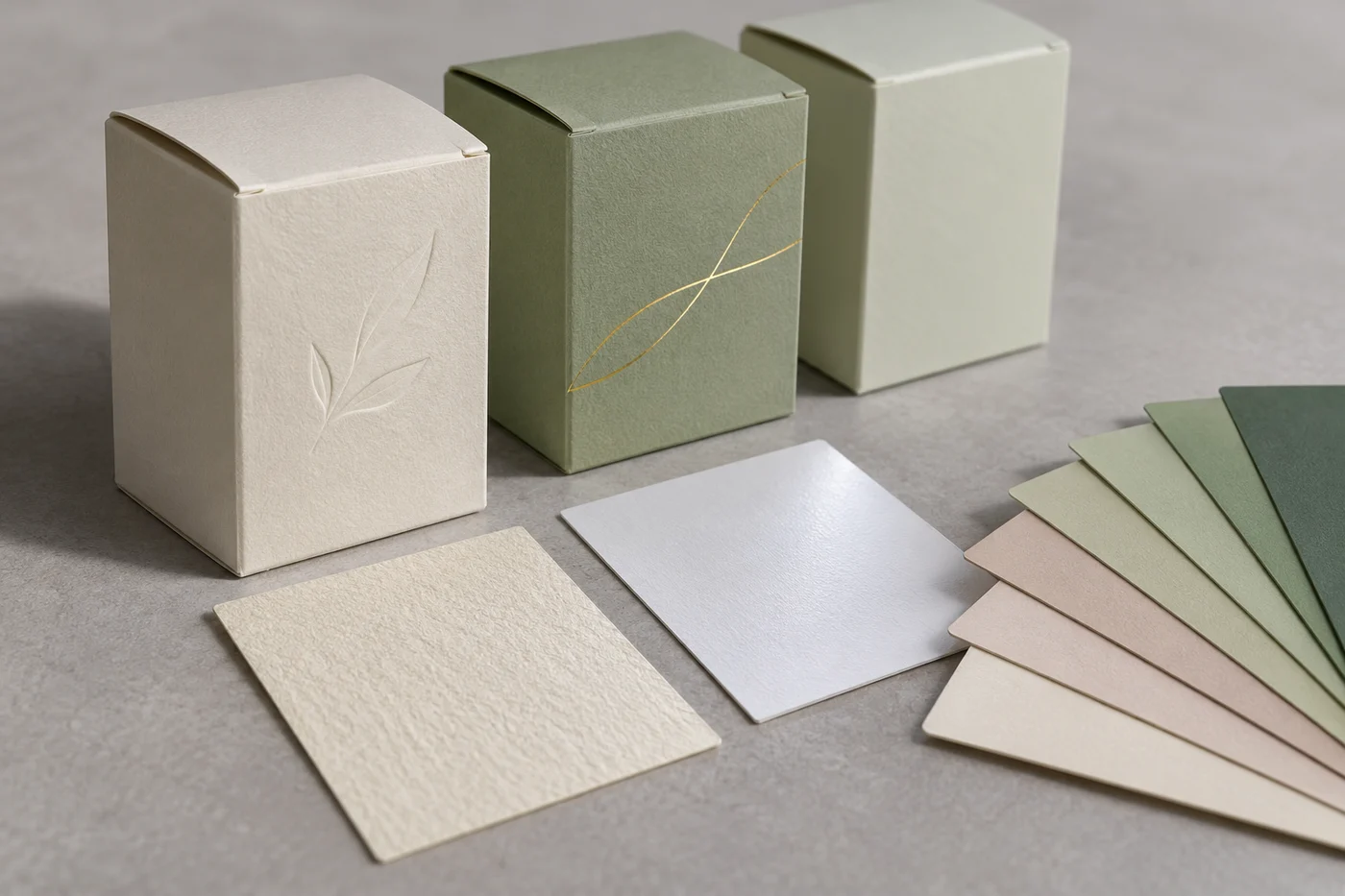
For custom printed skincare boxes, the paper affects stiffness, print appearance, surface feel and folding behaviour. Agree the board grade, grammage and, where relevant, thickness. Grammage measures mass per unit area; it is not the weight of a finished box or a complete strength specification.
White paperboard, brown kraft and textured wrapping papers produce different visual effects. Kraft is not automatically recycled or appropriate for every brand colour. If recycled content or another material claim matters, request documentation for the proposed specification.
Discuss printing, coating or lamination as one combination. Ask how the chosen surface behaves at folds and during normal handling. Avoid selecting a universal board weight from a photograph: product weight, dimensions, construction and insert design all matter.
Check Inserts for Glass Bottles and Cream Jars
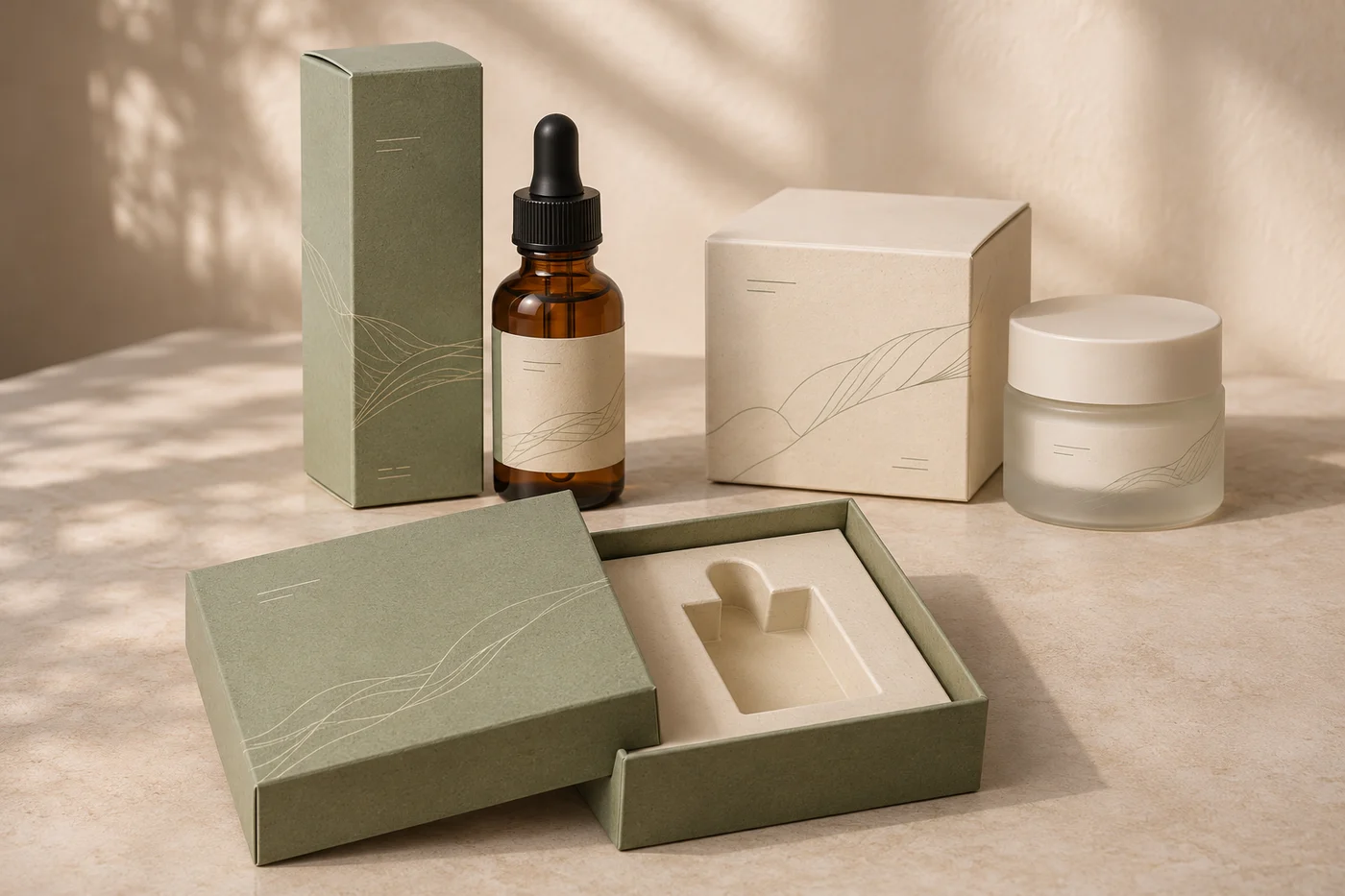
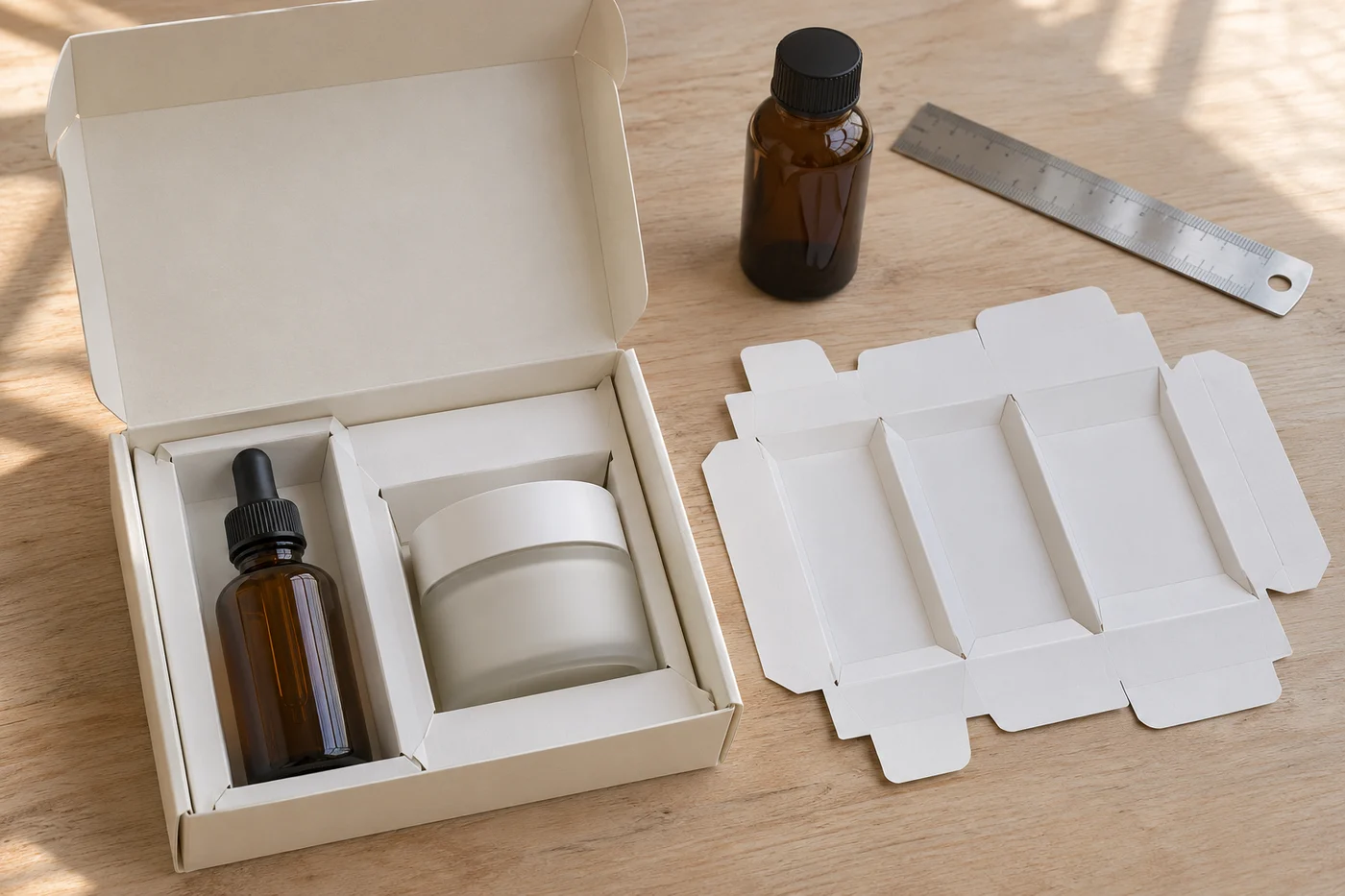
Skincare packaging boxes with inserts can help position products and separate components, but the fit must be assessed with the actual containers. Paperboard, corrugated, moulded fibre and foam inserts have different construction and handling characteristics. Confirm which options are available and suitable for the project.
Review how the insert supports the bottle or jar, where it contacts the surface, and whether the product can be removed comfortably. Check that it does not push on a pump, dropper or decorative cap. Include labels, seals and surface-sensitive areas in the review.
For custom skincare gift set boxes, check the combined weight and movement of the complete set. A serum bottle and cream jar should not rely on each other to stay in place.
Confirm Printing, Colour and Artwork Versions
Skincare packaging design needs readable information as well as consistent branding. Provide the approved logo, artwork, fonts or outlined text as requested, and separate files or layers for finishes according to the printer’s requirements.
Confirm CMYK and any spot colours, the colour reference, and how colour will be reviewed on the intended paper and finish. A spot-colour reference and its CMYK simulation are not automatically equivalent. A screen image is useful for layout review but should not be treated as the sole production colour reference.
Keep small text and essential graphics clear of folds, glue areas and openings. Agree achievable detail and registration with the printer instead of applying one minimum size to every process.
Foil stamping, embossing and lamination are finishing operations. Confirm their positions, files and sample representation separately from printed colour. For multiple products or markets, assign a clear artwork revision and quantity to each SKU. The brand’s responsible team should approve required wording, translations and claims.
Use the prepress artwork guide for file preparation.
Approve the Right Sample Before Bulk Production
Ask what the sample can establish and how it differs from production. An unprinted structural sample helps review fit and assembly. A printed appearance sample can help assess layout and selected visual features. A pre-production sample is useful only when its materials and processes are clearly identified.
Pack the actual product, close and reopen the box, remove the contents and check the insert. Compare measurements with the agreed drawing. Review printed text, colours and finishes against the correct files and references.
Illustrative example: A serum bottle fits inside a carton, but its dropper cap touches the top flap. Record the capped bottle height, the relevant internal space and the contact point in photographs. Ask for a proposed correction, then recheck closure, insert position and any affected artwork on the revised sample. This is a hypothetical review scenario, not a XINXIN customer case.
If transport protection is important, assess the complete product-and-packaging system and agree appropriate validation. An attractive sample or a material description does not establish shipping performance.
Record the approved sample reference, drawing and artwork revisions, materials, finishes, accepted changes and inspection requirements. Approval sets a production reference; it does not guarantee identical results for every unit. See the packaging samples checklist for the full review process.
Request a Quote Against One Clear Specification
Send the same specification to each supplier so the prices describe comparable work. Include:
- Packaging purpose, sales channel and product photos or a physical sample where practical.
- Complete container dimensions, filled weight and the full contents of each pack.
- Proposed structure, box dimensions and internal or external measurement basis.
- Paper, inserts, printing colours and finishing requirements.
- Artwork status, number of designs and quantity per SKU.
- Sample type, approval needs and any separate validation requirements.
- Flat, assembled or partly assembled delivery condition.
- Destination, required arrival date and the delivery terms to be quoted.
Ask which costs cover tooling, samples, revisions, production, packing and freight. Confirm the quantity basis for minimum orders and whether different designs are priced separately. Separate sample-making, revision, production and shipping time; the schedule should follow the actual approval and delivery arrangements.
Frequently Asked Questions
Can one box size fit several skincare products?
Sometimes, but confirm the fit of every version. An alternative insert or layout may be needed. Test the smallest and largest containers and identify each approved combination instead of assuming one sample covers the whole range.
Can I use an existing bottle label as the box artwork?
It can provide design elements, but it is not automatically a print-ready carton file. The carton has different panels, folds and usable space. Adapt it to the approved dieline and have the responsible brand team review the content.
What if I change the bottle supplier after sample approval?
Provide the updated container and specifications. Even the same stated capacity can have different external dimensions, cap geometry or weight. Recheck affected fit, artwork, materials and validation before releasing the changed pack.
Do I need to finalise every finish before requesting a quote?
You can request alternatives, provided they are clearly identified. Ask for a base specification and separately priced options, then confirm the selected combination and its sample requirements before production.
Discuss Your Skincare Packaging Brief with XINXIN
Send XINXIN Printing & Packaging your product type, complete container dimensions, expected quantity, artwork and delivery destination. Add the intended sales channel and any insert, printing or finishing preferences.
These details provide a useful starting point for discussing custom skincare packaging, sampling and a comparable quotation. Contact XINXIN with your brief so the proposed paper packaging can be reviewed against the actual product.
Technical References
- Pantone: Colour for Print and Packaging — spot-colour references and CMYK comparisons.
- ISTA: Can I certify an individual packaging material? — performance relates to the complete packaged product.
General guidance only. Discuss the product-specific materials, process, market requirements and testing before approving production.